

It's Melbourne Cup Eve
2 November, 2026
More Than a Race: The Extraordinary Story of the Melbourne Cup
A million-dollar gold trophy, an extraordinary 165-year history and ten remarkable facts about the race that stops a nation. There are great horse races, there are famous sporting occasions, and then there is the Melbourne Cup.
Every year, on the first Tuesday in November, Flemington becomes the centre of Australia's sporting universe.
For three minutes and a little more, the attention of millions turns to 24 thoroughbreds competing over 3200 metres, each carrying the hopes and dreams of owners, trainers, jockeys, breeders and racing enthusiasts.
Tomorrow, Tuesday 3 November, the Lexus Melbourne Cup will be run for the 165th time, offering A$8.66 million in prizemoney and a trophy that has become one of the most recognisable symbols in world racing.
But beyond the fashion, excitement, hospitality and enormous international interest lies an extraordinary history.
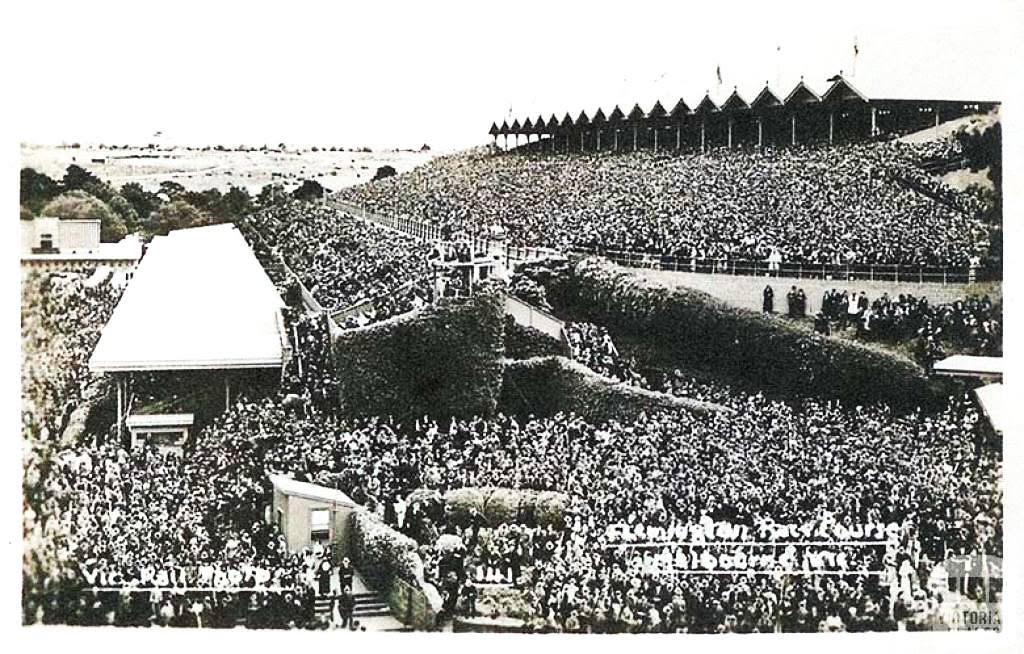
The Melbourne Cup was first run on Thursday 7 November 1861, when an estimated 4,000 spectators gathered at Flemington to watch a race that few could have imagined would become an Australian institution.
The winner was Archer, a New South Wales-trained horse who returned to win again the following year.
Since those early beginnings, the Melbourne Cup has witnessed the emergence of champions, the heartbreak of narrow defeats, remarkable international triumphs and some of the most memorable stories in thoroughbred racing.
It has survived economic depressions, world wars and enormous social change, while continuing to hold a special place in Australia's sporting calendar.
And while its history is celebrated every year, some of the most fascinating stories behind the Cup are less widely known.
Ten things you might not know about the Melbourne Cup
1. The first Melbourne Cup was held on a Thursday — not a Tuesday.
When Archer won the inaugural Cup on 7 November 1861, the race was held on a Thursday. It was not until 1875 that the Cup was first run on a Tuesday, a tradition that has become inseparable from the occasion. Melbourne Cup Day became a public holiday in Melbourne in 1876.
2. The original Melbourne Cup winner didn't receive a Cup!
Despite the race's name, Archer's connections did not receive the magnificent trophy we associate with the event today. For the first three runnings, no Cup trophy was awarded.
The winner of the inaugural race received a gold watch, while the early years featured different forms of prizes before the presentation of a trophy became established. The famous three-handled gold design was introduced in 1919.
3. The 2026 Melbourne Cup trophy is worth A$1 million.
The trophy awaiting tomorrow's winning connections is particularly special. For the first time, its gold has been sourced entirely from Australia's Northern Territory, from the Tanami gold operation.
The trophy contains almost 60 ounces of 18-carat gold, weighs more than 1.8 kilograms and comprises 44 individually shaped components. More than 250 hours of expert craftsmanship go into producing this extraordinary prize.
It is a remarkable piece of Australian craftsmanship, as well as a symbol of racing achievement.
4. Archer didn't walk all the way from New South Wales to Melbourne.
One of the most enduring stories in Melbourne Cup folklore is that Archer walked hundreds of kilometres from the Nowra district to Flemington before winning the first Cup. It's a wonderful tale - but it isn't true.
Historical records confirm that Archer travelled to Melbourne aboard the steamship City of Sydney. The legend has survived for generations, demonstrating how the Melbourne Cup has always inspired stories almost as memorable as the race itself.
5. A three-year-old filly once won the Derby, Melbourne Cup and Oaks in six days.
In 1876, the remarkable Briseis achieved one of the most extraordinary feats in Australian racing history. She won the Victoria Derby, followed by the Melbourne Cup, and then the VRC Oaks, all within six days.
It was an astonishing display of ability, stamina and toughness. Such a feat would be almost unimaginable in modern racing, and it remains one of the great achievements in the Cup's history.
6. The Melbourne Cup wasn't always exactly 3200 metres.
For much of its history, the Melbourne Cup was run over two miles, approximately 3218 metres.
When Australian racing converted to the metric system in 1972, the race distance became 3200 metres. Although the change was relatively small, it is an interesting reminder of how racing traditions have evolved over time.
7. One horse has won three Melbourne Cups — and she did it in consecutive years.
Makybe Diva holds a unique place in Melbourne Cup history. The magnificent mare won the race in 2003, 2004 and 2005, becoming the only horse to win three Melbourne Cups.
Other great horses, including Archer, Rain Lover and Think Big, won the race twice, but none matched her extraordinary treble. Her achievement remains one of the most celebrated in Australian sporting history.
8. The Melbourne Cup's greatest trainer won it an astonishing 12 times.
Bart Cummings became known as the Cups King for good reason. Across his remarkable training career, he prepared 12 Melbourne Cup winners, beginning with Light Fingers in 1965 and concluding with Viewed in 2008.
It is a record that illustrates the extraordinary skill, patience and understanding required to prepare a thoroughbred for Australia's most famous staying race.
9. The Melbourne Cup became Australia's first million-dollar horse race in 1985.
Today, enormous prize money is an established feature of international racing. But in 1985, the Melbourne Cup broke new ground when it became Australia's first million-dollar race.
Tomorrow's 2026 running offers A$8.66 million in prizemoney, reflecting just how far the event has developed commercially since the days when Archer raced for a comparatively modest purse.
10. The Melbourne Cup became truly international in 1993.
For much of its history, the Melbourne Cup was dominated by horses trained in Australia and New Zealand. That changed dramatically in 1993 when Irish trainer Dermot Weld brought Vintage Crop to Melbourne and won the Cup. The runner up was our own Te Akau Nick!
It was the first victory by an internationally trained horse and helped transform the race into a genuine target for leading staying horses from around the world.
The Cup's international dimension has since become one of its defining characteristics, bringing together different racing traditions, training methods and bloodlines in pursuit of one extraordinary prize.
The magic of the Cup lives on - perhaps the most remarkable thing about the Melbourne Cup is that, after 165 years, it still has the power to create new stories.
Every horse arriving at Flemington brings with it a journey of dedication, planning, patience and hope.
Behind every runner are the people who have bred, raised, educated, trained and cared for it. There are owners who have dreamed of this moment, stable staff whose early mornings have helped make it possible, and jockeys preparing for one of the most important rides of their careers.
For those fortunate enough to experience a Melbourne Cup victory, the memories last a lifetime.
And for racing enthusiasts watching from Australia, New Zealand and around the world, the anticipation remains as exciting as ever.
Tomorrow, another name will be added to the Melbourne Cup's remarkable honour roll.
Another horse will become part of history.
And another chapter will be written in a sporting story that began at Flemington in 1861.
That is the enduring magic of the Melbourne Cup.