

Some Traditions are Worth Fighting For
1 November, 2026
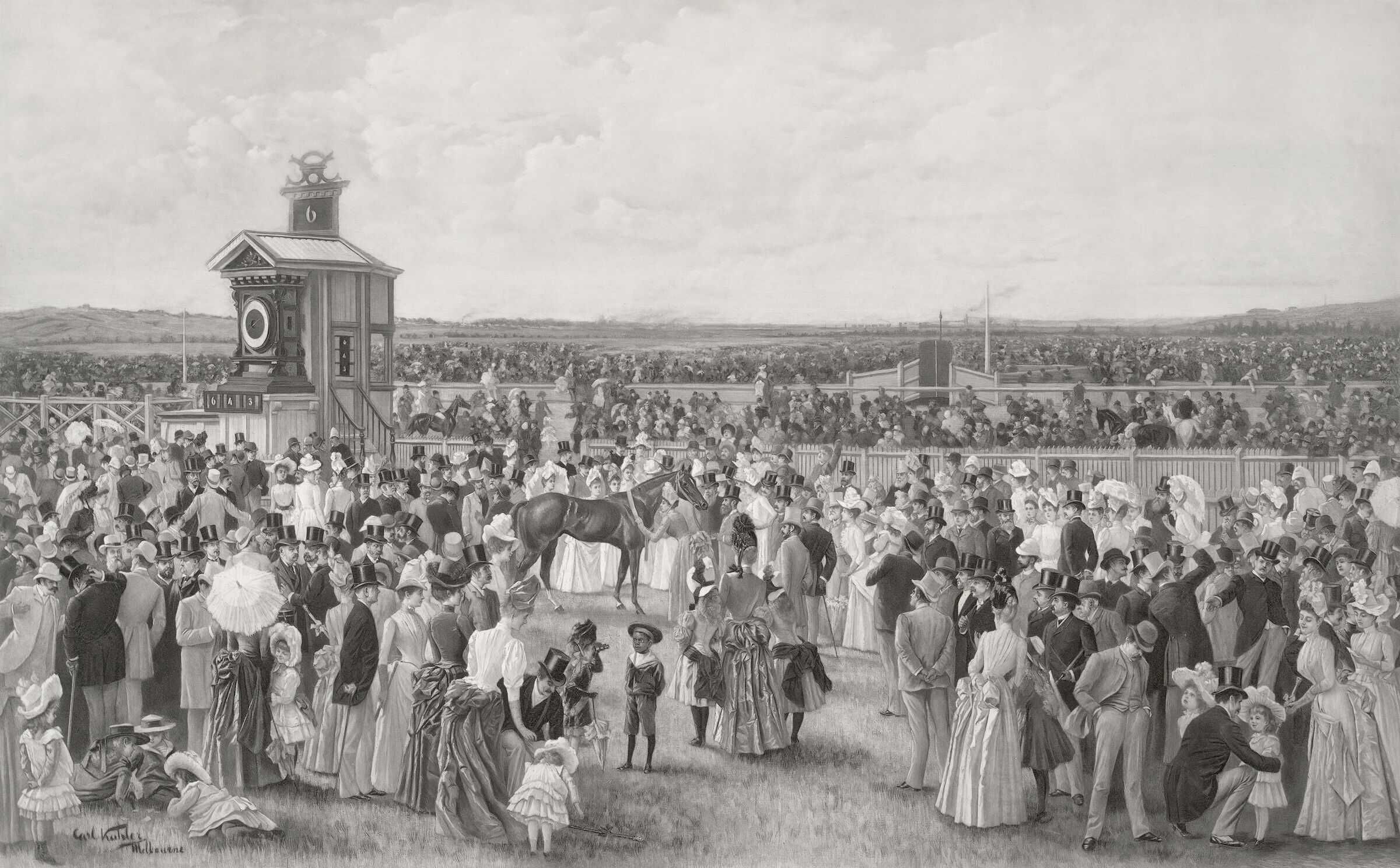
OPINION - The Victoria Derby: Some Traditions Are Worth Fighting For
As debate grows over reducing the distance of Australia's oldest Classic, we ask whether changing the race risks losing something far more valuable than 500 metres.
There are few races in Australian thoroughbred racing that carry the history, prestige and tradition of the Victoria Derby.
First run at Flemington in 1855, six years before the inaugural Melbourne Cup, the Victoria Derby is Australia's oldest Classic. For more than 170 years, it has tested the ability of three-year-old thoroughbreds to combine speed, stamina, courage and determination.
Yet, as we know, one of Australian racing's great institutions is now at the centre of a debate about its future.
Should the Victoria Derby remain a genuine staying test over 2500 metres, or should its distance be reduced, potentially to 2000 metres?
For those of us who believe that racing's traditions are among its greatest assets, the answer deserves careful consideration.
The discussion has arisen amid concerns about the race's standing within the international Group racing system. In July, the Asian Pattern Committee identified the Victoria Derby as one of several Australian races under consideration for a possible downgrade from Group 1 status. We are facing tis enormous challenge ourselves in New Zealand, with a number of our elite races under that same spotlight.
The race retained its Group 1 classification for the 2026–27 season, but its future status remains under review. In response, Racing Victoria and the Victoria Racing Club increased this year's Derby prize money by $1 million to a record $3 million, a significant investment in the race's future.
It is an encouraging commitment to one of Australia's most important races.
However, suggestions that the Derby might be shortened to 2000 metres have divided opinion.
Those advocating change believe a shorter distance could attract a broader group of three-year-olds, encourage participation and strengthen the race's competitiveness. Some also question whether 2500 metres is an appropriate test for horses at this relatively early stage of their careers.
These are legitimate considerations, particularly in a racing environment where participation, programming and international recognition are increasingly important.
But there is another side to the argument.
Champion trainer Gai Waterhouse has been among those strongly opposing a reduction, making the case for retaining the variety and character of Australia's major races. Hers is a view that many racing traditionalists share.
The Derby was never intended to be simply another middle-distance contest. Its significance lies in asking a different question of a young thoroughbred.
Can it stay? Can it settle, conserve energy, travel strongly and then find the courage to finish when the pressure comes?
Those qualities are part of what makes a Derby winner special.
The history is fascinating.
The original Victoria Derby was conducted over 12 furlongs, approximately 2400 metres, following the traditional distance of the English Derby at Epsom.
When Australian racing converted to metric distances in 1972, the race was run over 2400 metres. In 1973, the distance was extended to 2500 metres, partly to provide a fairer and safer run to Flemington's first turn. So the precise distance has changed before.
What has endured, however, is the fundamental purpose of the race: to identify an outstanding three-year-old capable of performing over a genuine staying distance.
Its honour roll is rich with Australian racing history.
The great Phar Lap won the Derby in 1929, while the extraordinary filly Briseis achieved something almost unimaginable in 1876, winning the Victoria Derby, Melbourne Cup and VRC Oaks within six days.
More recent winners include Tarzino, Hitotsu, Riff Rocket and Observer. And on Saturday, 31 October, Stormy Marco added his name to that distinguished list.
The Chris Waller-trained son of Wootton Bassett, ridden by our former stable rider James McDonald, produced a decisive performance to win the A$3 million Group 1 Victoria Derby over 2500 metres, defeating Cold Shower, with the filly Quick Finish finishing third.
It was a fitting reminder that the race continues to produce compelling contests and important achievements.
Interestingly, the 2026 Derby attracted a capacity field of 16 runners, with two emergencies, despite the debate surrounding its distance. That does not, by itself, settle the wider questions about the race's long-term health. But it does suggest that there remains considerable interest in competing for this historic prize.
The thoroughbred industry needs a variety of races and distances.
We need brilliant sprinters, outstanding milers, middle-distance champions and genuine stayers. We need breeding programmes that value stamina alongside speed, and races that reward the patience and skill required to develop horses for longer distances. Not every important race needs to become more like another.
There is also a wider question about what makes a Classic a Classic.
Is it simply the quality of the field, the prizemoney or the international rating? Or is it also the history, the challenge and the particular qualities a horse must possess to win it?
Surely it is a combination of all these things.
Of course, racing must evolve. Nobody should argue that tradition alone is sufficient reason to resist every change. The welfare of horses, the quality of competition and the future sustainability of our great races must always be central to any decision.
But changes of this significance should be supported by compelling evidence and careful consultation across the industry.
Reducing the Derby to 2000 metres would not simply shorten a race. It would fundamentally alter the nature of one of Australia's oldest and most respected staying contests.
The Victoria Derby has survived for more than 170 years because it represents something special. Its future deserves to be protected, not merely adjusted to suit the fashions of the moment.
There is room in Australian racing for innovation and tradition to stand proudly alongside one another. And there should always be room for a great staying Derby.
Some traditions are worth preserving. The Victoria Derby is surely one of them.