
Spring is Sprung
1 September, 2014

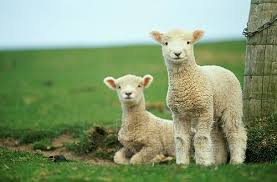
Ah yes the rhyme we all know well (see below if your memory needs a nudge)! What do we love about this day - it officially tells us that Spring is here - and that means foaling and mating of our mares AND Spring racing of course!
It's a season that traditionally hearalds renewal ... as we read this morning ...
Spring is one of the four conventional temperate seasons, following winter and preceding summer. When it is spring in the Northern Hemisphere, it will be autumn in the Southern Hemisphere. At the spring equinox, days are approximately 12 hours long with day length increasing as the season progresses.
Spring and "springtime" refer to the season, and also to ideas of rebirth, rejuvenation, renewal, resurrection and regrowth.
Meteorologists generally define the four seasons as spring, summer, autumn and winter. These are demarcated by the values of their average temperatures on a monthly basis, with each season lasting three months.
The three warmest months are by definition summer, the three coldest months are winter and the intervening gaps are spring and autumn. Spring, when defined in this manner, can start on different dates in different regions.
In terms of complete months, in most north temperate zone locations, spring months are March, April and May although differences exist from country to country. Most south temperate zone locations have opposing seasons with spring in September, October and November.
In Australia and New Zealand, spring conventionally begins on 1 September and ends 30 November.
The beginning of spring is not always determined by fixed calendar dates. The ecological definition of spring relates to biological indicators; the blossoming of a range of plant species, and the activities of animals, or the special smell of soil that has reached the temperature for flora to flourish.
During spring, the axis of the Earth is increasing its tilt relative to the Sun, and the length of daylight rapidly increases for the relevant hemisphere. The hemisphere begins to warm significantly causing new plant growth to "spring forth," giving the season its name.
From childhood ...
The spring is sprung, the grass is riz.
I wonder where the boidie is?
They say the boidie's on the wing.
But that's absoid. The wing is on the boid.
Translated ... (can you believe in a modern children's book) ...
Springtime has arrived and the grass has started to grow once more.
I wonder where the birds are nesting?
They say the birds are “on the wing†(flying).
But that's absurd. It's the other way round; the wings are on the birds.