Te Akau Weekend Update
5 July, 2014

David writes:
We are enjoying the first week of our break but are staying in good touch with everything happening at home in our daily calls and emails. It sounds like the weather has been quite brisk!
There is a great deal happening at Te Akau even though our winter racing team is small, we are already focused on the new season which begins on 1 August and will have a good number of trialists during the first weeks of the new season - with our eyes firmly fixed on Spring and summer racing.
I have also been in discussions to purchase a lovely new filly from her breeder - she is an Iffraaj filly from a very good family. Costing $30,000 plus GST, we will soon have shares available in her - a 10% share being only $3000 plus GST - she is great buying.
It's a big day of course today in the US with the celebration of Independence Day - 4 July.
Today we were awoken to the sound of canoe racing taking place from the early hours out on Waikiki beach and harbour area. Being a public holiday, there are thosuands of people out and about, enjoying the celebrating the long weekend.
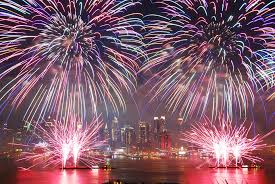
We plan on having a low key celebration - we have a balcony off our room which has a great view over the beach so will be an ideal spot to take in tonight's famous firework display. An old school friend of my family's and her daughter are joining us for a drink and catch up and then Lydia and Mitch are going pizza purchasing.
So it will be on the balcony, with a nice NZ chardonnay, local pizza and fireworks!
Most of you know the origins behind today's special day for Americans ...
Variously known as the Fourth of July and Independence Day, July 4th has been a federal holiday in the United States since 1941 but the tradition of Independence Day celebrations goes back to the 18th century and the American Revolution (1775-83).
In June 1776, representatives of the 13 colonies then fighting in the revolutionary struggle weighed a resolution that would declare their independence from Great Britain. On July 2nd, the Continental Congress voted in favour of independence and two days later its delegates adopted the Declaration of Independence, a historic document drafted by Thomas Jefferson.
From 1776 until the present day, July 4th has been celebrated as the birth of American independence, with typical festivities ranging from fireworks, parades and concerts to more casual family gatherings and barbecues.
The Birth of American Independence
When the initial battles in the Revolutionary War broke out in April 1775, few colonists desired complete independence from Great Britain and those who did were considered radical. By the middle of the following year however many more colonists had come to favour independence, thanks to growing hostility against Britain and the spread of revolutionary sentiments such as those expressed in Thomas Paine's bestselling pamphlet “Common Sense,†published in early 1776.
On June 7, when the Continental Congress met at the Pennsylvania State House (later Independence Hall) in Philadelphia, the Virginia delegate Richard Henry Lee introduced a motion calling for the colonies' independence. Amid heated debate, Congress postponed the vote on Lee's resolution but appointed a five-man committee-including Thomas Jefferson of Virginia, John Adams of Massachusetts, Roger Sherman of Connecticut, Benjamin Franklin of Pennsylvania and Robert R. Livingston of New York-to draft a formal statement justifying the break with Great Britain.
Did You Know?
John Adams believed that July 2nd was the correct date on which to celebrate the birth of American independence and would reportedly turn down invitations to appear at July 4th events in protest.
Adams and Thomas Jefferson both died on July 4, 1826 - the 50th anniversary of the adoption of the Declaration of Independence.
On July 2nd, the Continental Congress voted in favor of Lee's resolution for independence in a near-unanimous vote (the New York delegation abstained but later voted affirmatively). On that day, John Adams wrote to his wife Abigail that July 2 “will be celebrated, by succeeding Generations, as the great anniversary Festival†and that the celebration should include “Pomp and Parade…Games, Sports, Guns, Bells, Bonfires and Illuminations from one End of this Continent to the other.â€
On July 4th, the Congress formally adopted the Declaration of Independence, which had been written largely by Jefferson. Though the vote for actual independence took place on July 2nd, from then on the 4th became the day that was celebrated as the birth of American independence.
Early Fourth of July Celebrations
In the pre-Revolutionary years, colonists had held annual celebrations of the king's birthday, which traditionally included the ringing of bells, bonfires, processions and speechmaking. By contrast, during the summer of 1776 some colonists celebrated the birth of independence by holding mock funerals for King George III, as a way of symbolizing the end of the monarchy's hold on America and the triumph of liberty.
Festivities including concerts, bonfires, parades and the firing of cannons and muskets usually accompanied the first public readings of the Declaration of Independence, beginning immediately after its adoption.
Philadelphia held the first annual commemoration of independence on July 4, 1777, while Congress was still occupied with the ongoing war.
George Washington issued double rations of rum to all his soldiers to mark the anniversary of independence in 1778, and in 1781, several months before the key American victory at Yorktown,
Massachusetts became the first state to make July 4th an official state holiday.
After the Revolutionary War, Americans continued to commemorate Independence Day every year, in celebrations that allowed the new nation's emerging political leaders to address citizens and create a feeling of unity.
By the last decade of the 18th century, the two major political parties-Federalists and Democratic-Republicans-that had arisen began holding separate Independence Day celebrations in many large cities.
July 4th Becomes A National Holiday
The tradition of patriotic celebration became even more widespread after the War of 1812, in which the United States again faced Great Britain. In 1870, the U.S. Congress made July 4th a federal holiday; in 1941, the provision was expanded to grant a paid holiday to all federal employees. Over the years, the political importance of the holiday would decline, but Independence Day remained an important national holiday and a symbol of patriotism.
Falling in mid-summer, the Fourth of July has since the late 19th century become a major focus of leisure activities and a common occasion for family get-togethers, often involving fireworks and outdoor barbecues. The most common symbol of the holiday is the American flag, and a common musical accompaniment is “The Star-Spangled Banner,†the national anthem of the United States.