

The Wonder of Te Akau's Mark Walker
18 June, 2020

Mark Walker joined Te Akau Racing straight from school and has risen to the heights of a top-class thoroughbred trainer, capable of making his mark in any racing jurisdiction worldwide.
The youngest in history (31) when winning the first (2003/04) of five training premierships in New Zealand, his stand-out season was new national records of 108 wins and prize money ($3.7 million) in 2009/10 (plus a Guineas' win in Australia with subsequent Horse of the Year King's Chapel). Walker has since notched a further three premiership titles in Singapore, with a record 87 wins in 2017, and is the reigning Champion after winning taking premiership honours last year.


With a long queue of highly credentialed trainers regularly knocking on the door wanting to be based in Singapore, Walker and Te Akau were fortunate they had the track record and professionalism required to be granted permission and set up shop in Turf Club Avenue at Kranji Racecourse in 2010.
In November 2018, Walker recorded his 500th win in Singapore when Elite Invincible (Archarcharch) provided a season highlight in the $1.35m Singapore Gold Cup (Gr. 1, 2000m).

Timing is everything and it was a chance visit to Te Akau Stud that opened the door to the Walker on his career path.
“I was unloading horses one day
and Mark Walker walked up the driveway and asked me for a job,†said Te Akau
principal David Ellis (recently appointed as a Companion of the New Zealand
Order of Merit (CNZM) in the Queen's Birthday Honours List 2020).
“I said: ‘look, I'm sorry but at
the moment I haven't got any spare positions'. But he gave me his CV and said,
‘when you've read this CV you'll have a job for me'. I read it that night over
a cold beer and thought this guy has got something. He'd just finished school,
he had a bursary to go to university, he was intelligent, and I thought I'd
give him a job on three months' trial and we've worked together ever since.
It's definitely the best business decision I've ever made.â€
“From day one, Mark stood out as a leader in every respect,†Ellis said. “He was a great show jumping rider and is a genius with what he can get a horse to do. When he was only 26, he had trained the favourite for a Melbourne Cup! Twenty years ago, Mark would work all the horses at our Matamata stable and then drive to Te Akau and assist with the horses we were breaking in.

“Not only is he an extremely good judge of a horse but he's the best trainer I have ever seen in preparing a horse to peak for its main target. He's just in a class of his own. He has the ability to get inside a horse's head and he understands the importance of making a horse happy and keeping it happy, so that it can go to the races and give its best. Horses only do that if they are happy and Mark seems to have an unbelievable way of understanding the individual characteristics of each horse. And I think that's why he's so successful. That, plus he's such a hardworking and professional guy. He's always working and thinking about how to get the best out of the horses he trains.â€
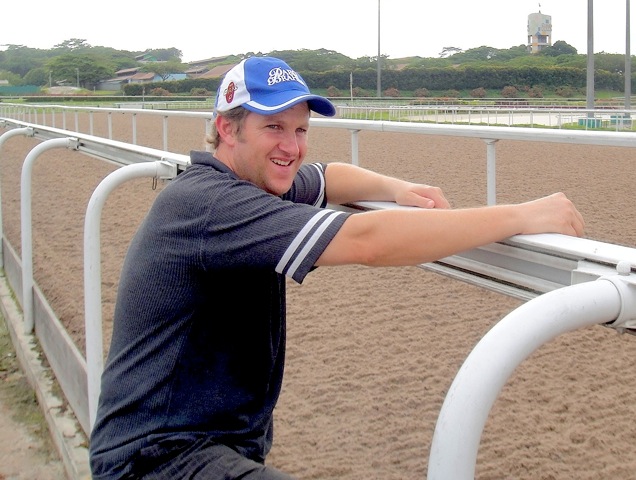
Like Kiwi trainer Chris Waller, who grew up in Foxton before becoming a star in Australia, Walker also arose from somewhat obscure beginnings and it was a Shetland pony named Mac that provided his introduction to horses.
“My parents were dairy farmers in
Rahotu, about 30 minutes out of Opunake, Walker said. “We went to friend's
place for a barbeque when I was four or five and I rode the little black
Shetland a few times there and loved it.
“Not long after that my parents
bought Mac for my birthday and he became my first pony. I started at Opunake
Pony Club and ended up doing a lot of show-jumping and eventing between the
ages of seven and 17.
“Mum and Dad then sold the farm
and we shifted to Hamilton where they bought a farm that raised chickens under
contract to Ingham's. We weren't far from Graeme Rogerson's stables, so I
applied for job riding track work before school. I hadn't ridden track work before,
but thought how hard can it be?
Despite the experience at the
racing stables, Walker was still not sure that was the path he would take.
“I was quite good at economics at
school and I've always loved farming - I still love farming now,†he said. “I
thought I'd like to be rural banker, but one day I went on the float to Te Akau
with some spellers. I thought ‘wow' when we came up over the hill into the Te
Akau Valley.
“I remember one Sunday I was
working and Dave (Ellis) came to inspect some horses. I think I paraded one and
met him. I was still at school at the time and went back to Te Akau on the
horse truck and thought it might be a nice place to work for 12 months while I
made up my mind about the future.
“So, I took my CV with me and gave it to Dave and asked for a job. He said he didn't have any vacancies, but I asked if he had time would he read my CV and if any positions came up would he contact me. He rang me that night after taking the time to read it and he made a job for me. I went out there and the rest is history.

“I was one of the lucky ones. Dave took a chance on me and although the original farm was only 500 acres then it has just grown from there. I helped on the horse side and farming with the sheep and cattle and we were jack of all trades back then. You turned your hand to anything and everything.â€
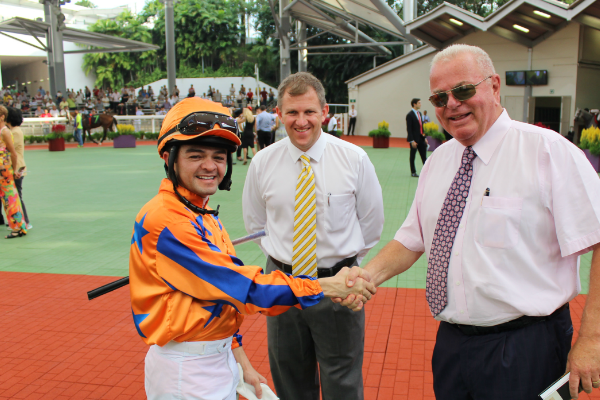
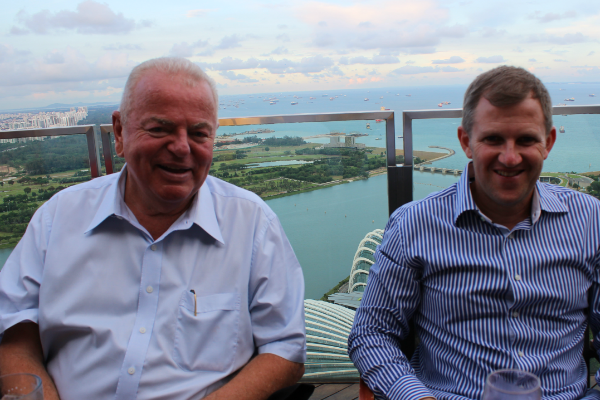
From that platform, Walker was able to study the thoroughbred in more detail and began shaping his future as a trainer - into a career where the thought processes about horses is always a constant.
Much of the success by anyone in
any field is the result of hard work, and time spent thinking can prove the
most productive.
“Thinking is the hardest work
there is, which is probably the reason that so few engage in itâ€, said Henry
Ford, founder of Ford Motor Company.
“A lot of good trainers over the
years have also been good stockman and I think experience with different stock
helps you notice things that others without that experience possibly wouldn't,â€
Walker said.
“It's the very little things. It
might be when you're doing the waste feed in the morning and you look at a
horse's bedding and see he's walked the box a bit during the night and he may
not be coping with the work he's been given and you may need to back off a
little bit. That's just one example, but I think there are many little things
that you do with a horse that makes the difference between winning races and
not winning races.
“Some horses, no matter what you do, are only going to be average horses but even with that average horse in New Zealand terms, if you could get it to win on a Thursday you've still managed to get the potential out of it.
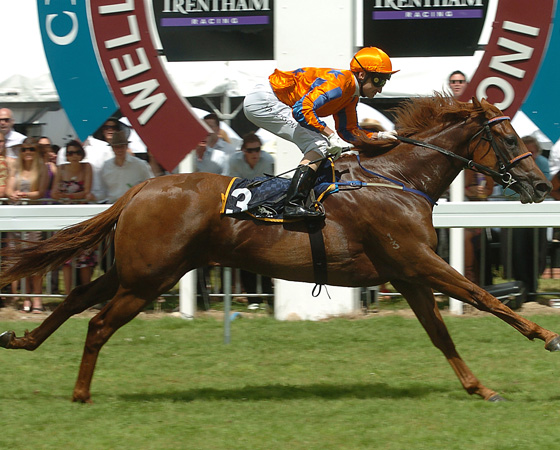
“Whereas you get other horses like Darci Brahma and Princess Coup and they have oodles of ability. No matter what you did with horses like them, they would still win a lot of races. But, I think the difference between many trainers, and what sets them apart, is being able to get an average horse to perform at its best and be competitive enough to win. It's attention to detail and being able to get inside a horse's head. Even it's a Maiden race at least you've got a win for the owners.
“One of my great friends is Paul O'Sullivan, even in New Zealand before he went to Hong Kong. I thought Paul was a new age trainer and he thought outside the square. We talk a couple of times a week because we're on the same time-line, and we're always swapping ideas. Even at this stage in our careers, we are always thinking of better ways of doing certain things with horses and in a way, the moment you stop thinking you're in trouble.

“In Asia, where we're training, soundness is a huge thing and obviously if a horse isn't sound it doesn't try as hard because it's hurting somewhere. You get to know all the signs and work out the best ways to keep them sound and fit. We only give horses a freshen-up, whereas in New Zealand they can spell in winter. However when you're in Asia, the owners want to have as many runs out of a horse in the year as they possibly can and also when you train in Asia there is the immense pressure of betting that we don't have to deal with on the same level in New Zealand.â€
Along the way, Walker has worked
alongside some great trainers and credits them for good advice and an
understanding through watching them work with horses.
“I was lucky when I was training at Matamata. There was Dave O'Sullivan and Jim Gibbs, wonderful trainers who were always so gracious in giving advice and they probably got sick of me because I asked so many questions,†Walker said.

“But if you don't ask questions you don't learn. NZ Hall of Fame trainer Colin Jillings is another example - I used to follow him around at the races asking him questions and seeking advice. Those three in particular - three of the all-time greats in New Zealand - I asked for a lot of advice and they were so generous with their time.
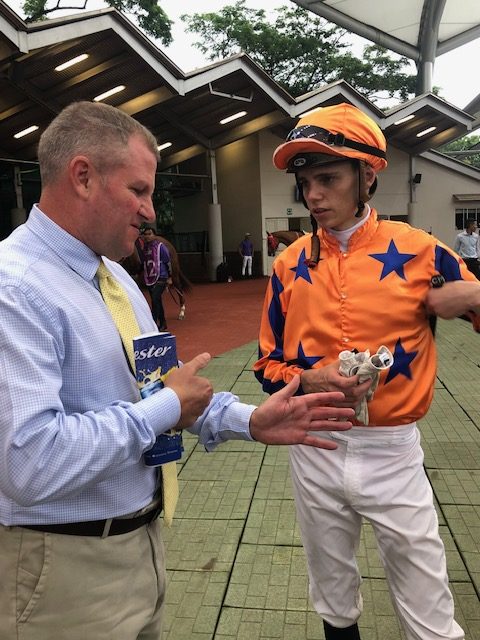
While he may not have become a rural banker, Walker is nonetheless pleased with his chosen career.
“Well, that is the beauty of
thoroughbred racehorses,†he said. “Even though I only train at one track now,
there is still something different each day with horses. You find out a horse
may benefit from more swimming, rather than going on the track every day, and
training is always adapting to new technology. We train a lot more on the
treadmill and it keeps horses sounder. I
actually said to the home team that I'd been training on the treadmill and
think you could benefit with one at Matamata.
I think it has been a great tool for Jamie (Richards) and the New
Zealand stable as well.
“I think, fundamentally, when you're starting out, and I was one of the lucky ones that I met Dave when I was young, you need someone to back you. Not only financially, but in every other way too. Dave has been in the game a long time and can read a race better than most people I've met and he's never afraid to back off a horse, give it a spell when it needs a spell, and there's always another day with him. That's part of the success of Te Akau. There are a lot of horses that are given time and of course when you give them time it costs more money, so you've got to have someone that understands racing completely and Dave's very fortunate that he does. We are also lucky with the quality owners we have, and they understand and support our patience.â€

“So, you need the break and you've got to get the chance. Then you've got to have the ability, I suppose, and it's a bit like a great gardener: a great rose grower, some people can do it and some people can't, and that's the bottom line.â€
Walker has trained 1466 winners
and while Maroofity (Maroof) provided his first Group One win in 2003 and
five-time Group One winner and Champion stallion Darci Brahma (Danehill) may be
the best horse he has trained, Distinctly Secret (Distinctly North) is a
forerunner in his mind along with King's Chapel (King of Kings).
“I think the most special win I've ever had is when Distinctly Secret won the Group 1 Kelt Capital Stakes at Hastings,†he said. “Dave bred him and owned the majority of him. It was at a time when Dave had put a lot of his own money into getting my career underway and had a lot of shares in yearlings himself. It was a big financial windfall ($450,000) back in those days and that got us going.
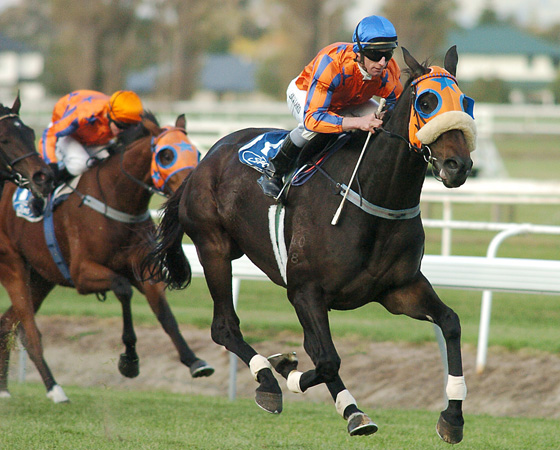
“King's Chapel was a great horse. He won the Mercedes Classic, the equivalent of what the Karaka 2YO Million is now, and then he won three Group 1 races - the NZ 2000 Guineas, Telegraph and Otaki-Maori WFA. He was a very, very good horse, by a stallion that was ordinary, and it shows Dave's eye for a horse. He paid $35,000 and he became an exceptional racehorse. Interestingly, the same syndicate were lucky enough to have Maroofity, who Dave bought for $46,000, at the same time. Maroofity was Champion Two-Year-Old and King's Chapel was Champion Three-Year-Old, Champion Sprinter-Miler and Horse of the Year, so we had a lot of fun with those horses and that ownership group. They were very special people.
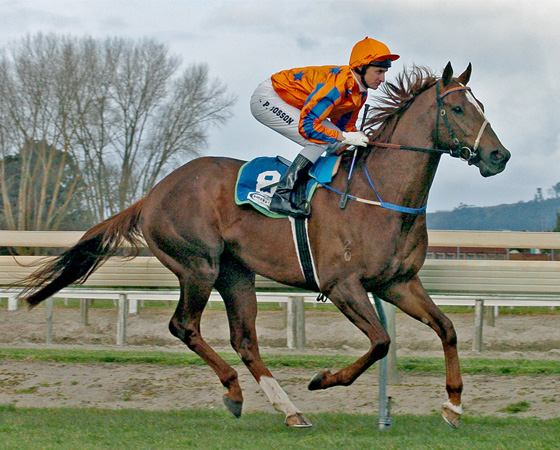
CHAMPION 3YO - CHAMPION SPRINTER/MILER
“Then you've got horses like Princess Coup, who was a great mare to train, and we can't forget Darci Brahma. He was the first expensive horse that Dave bought and to do what he did it made the rest of them a little bit easier because he was the trailblazer. It made the bigger risk purchases a lot more exciting and what Darci's done for the New Zealand breeding industry is incredible. He's been a great sire and we've enjoyed training his progeny as well.
“The Matamata Breeders' Stakes is a special race because it's your home track and it's been won by some brilliant fillies and we've been lucky enough to win it six times. Another highlight was to have three consecutive New Zealand Bloodstock Fillies of the Year. That series is not easy to win and to have three in a row was fantastic with Shikoba, Princess Coup and Insouciant.†(Te Akau has now trained five NZB Fillies of the Year).
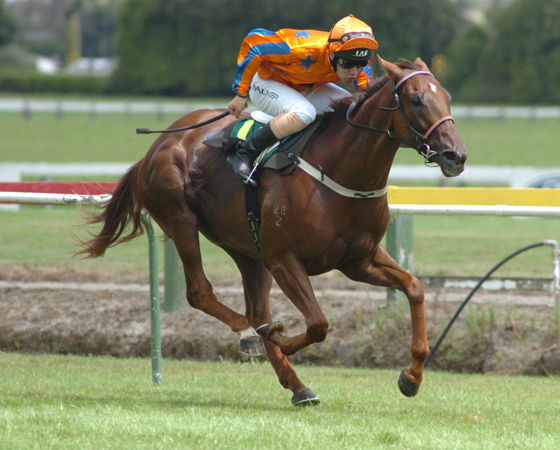
ONE OF FIVE TE AKAU NZB FILLIES OF THE YEAR
Although his attitude to training horses has remained the same, Walker had to adapt when moving to Singapore.
“Training in Singapore compared to training in New Zealand is like chalk and cheese,†he said. “The heat and the environment, if you trained a horse the way you did in New Zealand, you'd have a very tired horse at the end of each week. It's much the same as we train two-year-olds at home. Once they're fit you keep them mentally fresh and keep them happy and content, which is the method I've adopted for most of them in Singapore. You work them a lot softer: short, sharp, work and keep them fresh and happy and try to keep them sound for as long as you can.â€

Content where he is training at present, Walker has also contemplated the future of racing for himself and the sport.
“I was 38 when I left New Zealand
and I think our timing was very good with what has happened since. Hopefully
with Winston (Peters) getting onboard as Minister for Racing there will be positive
changes, time will tell.
“I'll be anxious to see how New
Zealand racing recovers. Personally, I think RITA (Racing Industry Transition
Agency) is doing a very good job. RITA took over a very unhealthy situation, it
was handed a sucker punch, really, when it took over. It was in a hell of a
mess and they've had to make some very tough decisions already. We're fortunate
that Winston backed RITA and you've got people like Sir Peter Vela on that
board. We're still going to go through some pain and a bit more suffering
before it recovers, but there's an old saying: ‘no pain, no gain'. Hopefully,
it's the start of turning things around especially if the next Bill goes through
and they get it right. I think people have to realise that the legislative
changes do take time.
“I think racing throughout the world is facing a lot of challenges, just as the world's economy is. So, it is going to be fascinating to see most racing jurisdictions in five years' time and see the ones that have recovered and those that have gone further backwards. Who knows? It will be interesting to see which countries can turn it around and which fall further behind.

“It's been a fantastic journey and it's not over yet. I was 48 on 9 June and I think there's still a lot more in store for me. To win the Singapore Gold Cup was a highlight because that's the race everyone wants to win here. There is still a lot fire in the belly and while it was more for financial reasons - the shift to Singapore, which has been very good for the business - I want to train 1000 winners in Singapore and then maybe I could come back and try getting to 1000 in New Zealand, which would be a unique double.
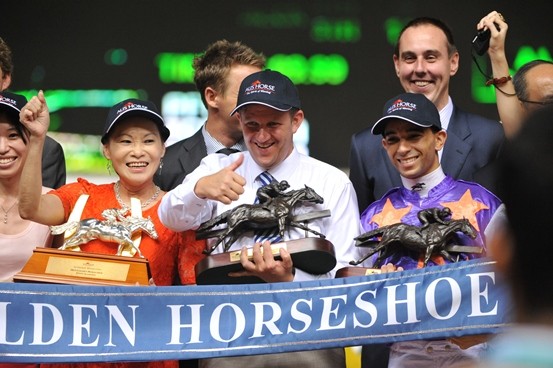

“Obviously, being in lockdown I've had more time to think about the future and that's what I've been thinking about recently. I'm still loving training thoroughbreds and looking forward to the resumption of racing here, because I do get bored quite easily.
Walker was delighted to see David
Ellis, the man that gave him an opportunity, rewarded in the Queen's Birthday Honours'
List with a Companion to the New Zealand Order of Merit (CNZM).
“It was fantastic and well
deserved, and I was very proud of him,†he said. “I've been there from almost day
one and I think some people have the misconception that he was given a leg-up
along the way, but he's done it through sheer hard work and determination. He's
done it the hard way and I'm super proud of what he's achieved.
“I was very fond of Dave's
parents. Dave senior, or JDO as we called him, and his mum Joanie, and I just
know how proud they would be of Dave.â€
Walker was also keen to acknowledge the input from Karyn Fenton-Ellis MNZM, an original Trackside Presenter (Action TV) who was appointed as a Member of the New Zealand Order of Merit in 2014 for services to the Arts, Community, and Racing.
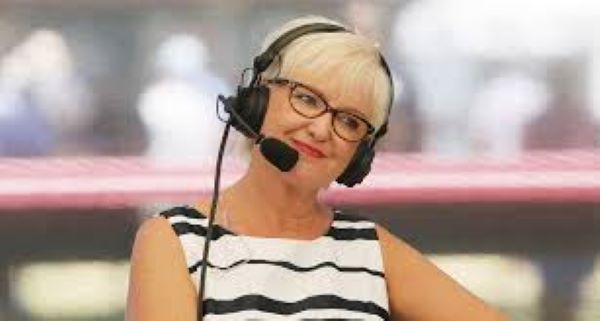
“It's been an incredible journey for both us and once Karyn came along everything went to another level. She brought an X-factor that we were missing a little bit. She's got a great brain and has a marketing and PR background. We'd grown the business to a very good level, but when Karyn came onboard it jumped up in professionalism and she probably knocked a few rough edges off Dave and me. She taught us how to handle the media better and she's been a huge part of the further growth.
“The success of the stable starts in the sales ring at Karaka, with the horses that we buy. Without being able to buy those horses and have Dave and Karyn syndicate amongst a wonderful bunch of owners that Te Akau has then our success wouldn't be what it is. We can't make slow horses run fast, so we're just lucky Dave has an incredible eye for a good horse and buys the right horses and that we're able to get them sold.â€
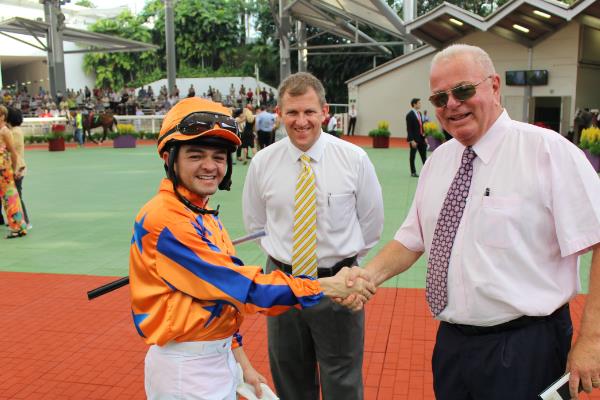
On the family front, Walker has two children into the teen years and recently became a father again.
“Zavier is 13 and he'll be 14 in
July and Alexis is 11,†he said. “They go to school in Australia. Zavier is
keen on racing, but at that age, who knows? He still takes riding lessons but is
more into his sport and Alexis is not horsey at all. She's into her drama and
the arts.
“My partner Mirka and I have a
daughter, Skyler, who is six months old. It's been fantastic, especially with
the lockdown. Even though we've still been able to train the horses, obviously
I've had a lot more time at night to spend with the family. It was unfortunate,
because the other kids were due to come for school holidays but weren't able to
and hopefully by Christmas holidays Zavier and Alexis can come up for Skyler's
first birthday in December.â€
No man is a mountain and success as a horse trainer, in such a hands-on industry, comes with the additional hard work and dedication from others and Walker has been served unequivocally by his assistant trainer Gus Clutterbuck.
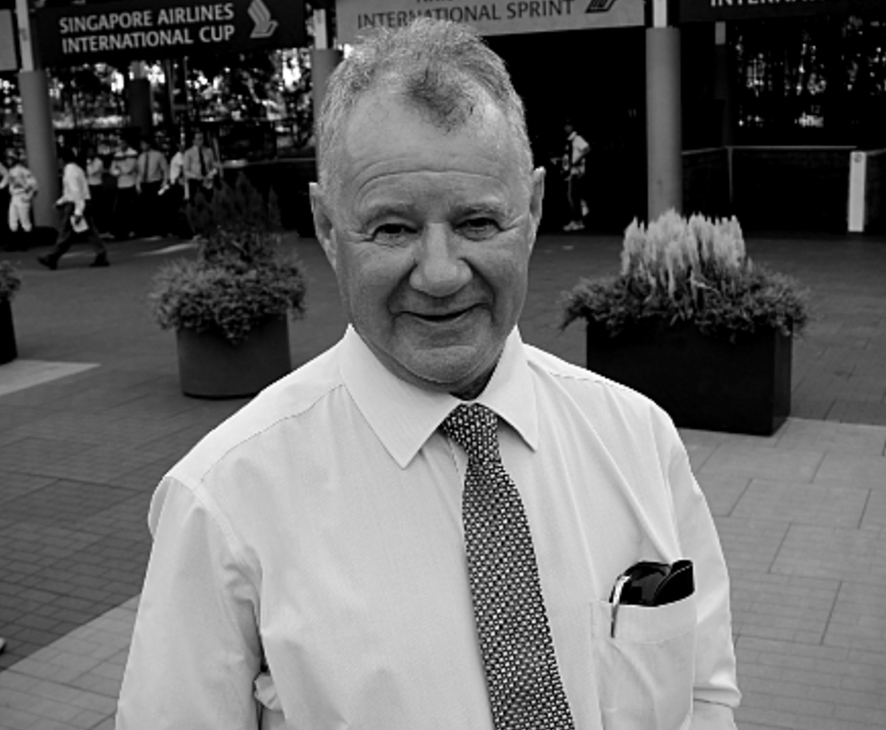
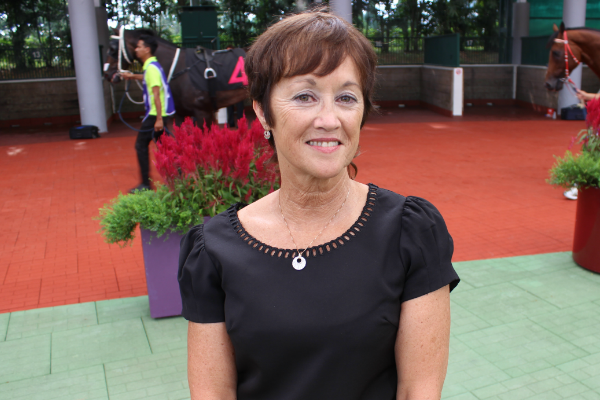
“Gus and Karen (Clutterbuck) and I have worked together for 16 years and that was our eighth premiership in 2019, so pretty special in itself. Premierships are not easy to win in any country and that's now eight, with five in New Zealand, and three here, so that's certainly a highlight to have added another title.
“We're all happy here. Singapore
is a lovely country to live in and we're very lucky to be in such a safe, well
run, country. There is zero tolerance of crime and I think a lot of countries
could take a leaf out of their book and make the deterrence of crime a lot
stronger. And through that, the world would be such a better place to live in.
“We've all had a chance to take
stock of the future during lockdown and it made me realize without having any
racing that you definitely miss it. I miss the excitement of it. You do miss
that adrenalin rush you get at the races and of course from winning races for
the owners.â€
Walker has obviously created an enormous impression in his second home, and privy to his successes has been Singapore Turf Club journalist Mike Lee. “Mark is the consummate professional and horseman,†Lee said. “It doesn't surprise me at all that he has won three premierships in his nine full seasons in Singapore. Well done and well deserved!
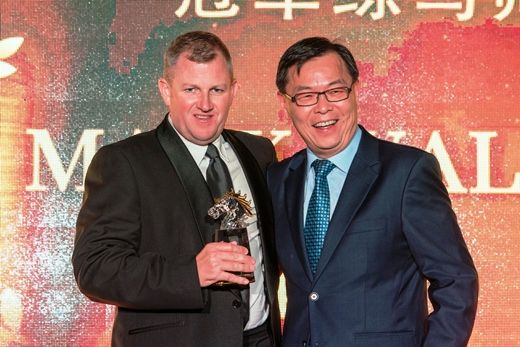
“Granted, he enjoys the backing of a powerful outfit in Te Akau Racing in New Zealand, but he has also built up a strong base of local owners over the years, with the likes of Elite Performance Stable and Dato Yap Kim San's Raffles Racing Stable, to name a couple. Anywhere in the racing world, a good turnover of horses is a key factor in winning premierships, but you also need to be a great trainer and Mark is no doubt one of the finest we've ever had at Kranji.
“It is a well-known fact that Mark has been more dominant with the bread-and-butter horses over the years, but give him an above-average horse and you can rest assured his Midas touch will come to the fore. Elite Invincible did propel him into the limelight with a few feature race wins last year, including his highest acclaim in the Dester Singapore Gold Cup (2000m). Before that, the other horses to put him on the map were (Poly track Horse of the Year) Flying Fulton and War Affair as a juvenile.

CHAMPION SINGAPORE POLYTRACK HORSE OF THE YEAR
“What I personally appreciate in Mark is his meticulous approach to training. He leaves no stone unturned, and never rests on his laurels. Even if he's had a big day at the office the day before, he is always at the stables the next morning to run his eye over each and every horse whether it is a Class 5 horse or a Group 1 horse. And, at the barrier trials, he is the only trainer I know who records his horses' runs on his Smartphone, to communicate later with owners.
“Mark is a rather reserved person who prefers
to keep to himself, especially at track work, and focus on his horses. For
instance, you would seldom see him at the trainers' hut (or the breakfast area
as it's commonly called) in the morning, but personally, I have always
appreciated his readiness to give an interview. Mark is very comprehensive,
detailed and open about his horses, whether they are going well or they've met
with some issues. Again, that is to me the hallmark of his true
professionalism.
“When Mark first arrived in Singapore, he himself admitted he was just a country boy who was taking a huge leap of faith to walk away on a highly-successful career in New Zealand, to start from scratch in a foreign land, but though you can never remove the Kiwi in him, he has adapted very well to the local conditions here. He is a real asset to Singapore racing.â€

Back